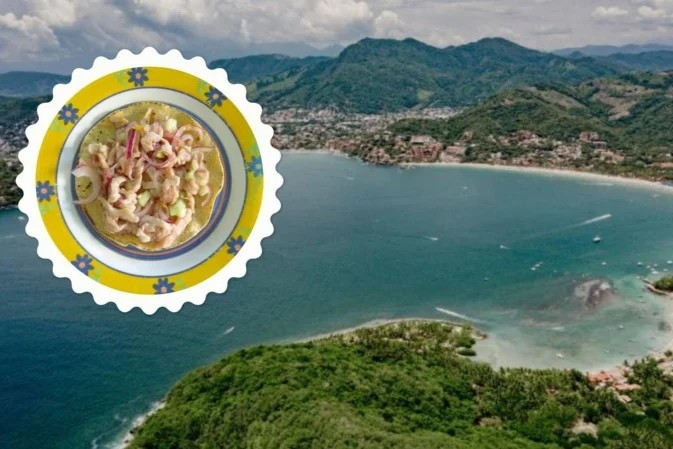

If you’ve ever heard of Zihuatanejo, you probably picture a picture-perfect bay or that corner of the Pacific coast that appears on postcards. But what many don’t know is that this destination in Guerrero has officially been a Pueblo Mágico (Magical Town) since 2023, and that behind its blue waves lies a history spanning millennia, a cuisine that smells of charcoal grills and lime, and experiences that go far beyond simply lounging on the sand.
What seems incredible is that Zihuatanejo wasn’t born as a tourist destination; for centuries it was a fishing village that today retains its essence intact, even with the Pueblo Mágico sign hanging at its entrance.
Its history dates back to the pre-Hispanic civilizations of the Costa Grande region of Guerrero, and one of its most fascinating stories involves the Tarascan king Caltzontzin, who, according to legend, ordered the construction of a stone breakwater to protect his private beach. That place is now the famous Playa Las Gatas, and part of the artificial reef is still visible underwater.
What seems incredible is that Zihuatanejo wasn’t born as a tourist destination; for several centuries it was a fishing village that today preserves its essence intact, even with the Pueblo Mágico sign hanging at its entrance.
Its history dates back to the pre-Hispanic civilizations of the Costa Grande region of Guerrero, and one of its most fascinating anecdotes involves the Tarascan king Caltzontzin, who, according to legend, ordered the construction of a stone breakwater to protect his private beach. That place is now the famous Playa Las Gatas, and part of the artificial reef is still visible underwater.
Centuries later, the Spanish recognized this bay as a strategic point on the Pacific coast, and thus, layer upon layer of history, the Zihuatanejo you can visit today was built.
The heart of it all is Zihuatanejo Bay: a semicircle of cobalt blue waters sheltered by jungle-covered hills that create perfect conditions for swimming, sailing, or simply contemplating the horizon.
The Paseo del Pescador (Fisherman’s Promenade), the boardwalk that connects the Main Beach with Playa Madera (Wood Beach), is a must-do stroll at sunset. Fishing boats returning with their catch, restaurants opening their tables facing the sea, and local artisans complete a picture that needs no filters.
The beaches: each one a different story
Zihuatanejo doesn’t have just one beach; it has an entire coastal system where every corner has its own rhythm.
Playa La Ropa: The most popular and longest; ideal for staying overnight, eating with your toes in the sand, and watching breathtaking sunsets.
Las Gatas Beach: Only accessible by boat from the pier (approximately $100 pesos per ticket); its calm waters are perfect for snorkeling and it has a Tarascan history underwater.
White Beach: The most discreet gem, with finer sand and fewer tourists. It’s well worth a visit.
Coral Beach (Ixtapa Island): Reached by boat from Linda Beach; its coral reefs and colorful fish make it ideal for family diving and snorkeling.
Beneath the surface, Zihuatanejo holds another kind of treasure. The area’s seabed is home to some of the most accessible coral ecosystems in the Mexican Pacific, with sightings of rays, octopuses, moray eels, and schools of multicolored fish visible at shallow depths.
And if adrenaline is your thing, the waters of Ixtapa-Zihuatanejo are ideal for world-class sport fishing: grouper, barracuda, jack, sailfish, marlin, and dorado inhabit these waters. The Zihuatanejo Annual International Sailfish Tournament brings together competitors from across the continent every year. Local marinas offer charters ranging from half-days to full days for fishing for the great Pacific marlin.
Fish strips are Zihuatanejo’s signature dish: sailfish fillet cut into thin strips, “cooked” in lime juice and coarse salt, with red onion and habanero pepper. No fire, no cooking, no fuss. Just freshness and the purest Pacific flavor.
But the regional cuisine goes far beyond that. Here are some other dishes you should try during your visit to this magical town:
Shrimp broth. Fresh shrimp of the day in a broth of guajillo chile, tomato, and local herbs. Comforting and full of the taste of the sea.
Grilled fish. Whole fish, marinated with achiote and spices, grilled over coals on a wire grill. Crispy skin, smoky and juicy flesh.
Rajas tamales. Corn masa filled with poblano pepper strips, cheese, and cream; a direct legacy of the indigenous tradition of the Costa Grande region.
Aporreadillo. Shredded beef with egg and chili, cooked over a wood fire and served with rice, beans, and handmade tortillas.
Chilate. The ancestral beverage: cacao, rice, and spices. Guerrero’s signature drink that you won’t find anywhere else.
Where to eat in Zihuatanejo: the favorites of those who have already been?
Don’t improvise when looking for a restaurant; the food stalls in the municipal market are the best-kept secret for a typical breakfast or lunch without breaking the bank. If you go on a Saturday, look for the Eco Tianguis Sanka to find local products, handicrafts, and snacks with a Guerrero identity.
These options are backed by thousands of reviews on TripAdvisor and Google Maps:
La Gaviota (Playa La Ropa): Over 40 years of experience and a 4.9 rating on TripAdvisor. A classic that never disappoints.
El Faro: 1,934 reviews and 4.7 stars; seafood and Pacific cuisine in an oceanfront setting.
Tentaciones Restaurant: 4.8 stars; contemporary Mexican cuisine with a creative touch.
Maderas Seafood Grill & Bar (Playa La Madera): Grilled seafood platters right on the water.
How to get there from major cities?
Zihuatanejo is one of those places that wins you over the moment you step out of the car, bus, or plane. A Pueblo Mágico (Magical Town) that doesn’t need to be shouted from the rooftops because its magic is felt from the first bite of fish strips with your feet practically in the water. If it’s not already on your bucket list, you know what you’re missing.
From Mexico City. The best option is to fly to Ixtapa-Zihuatanejo International Airport (ZIH), which receives direct flights from Mexico City International Airport (AICM) and Felipe Ángeles International Airport (AIFA). If you decide to drive, you should take the Mexico City-Acapulco-Zihuatanejo highway, but allow at least seven hours for the drive.
From Acapulco: By car, take Federal Highway 200 (the coastal highway) for approximately 3.5 hours, enjoying stunning views of the Pacific Ocean throughout the journey.
Source: guacamole.radioformula