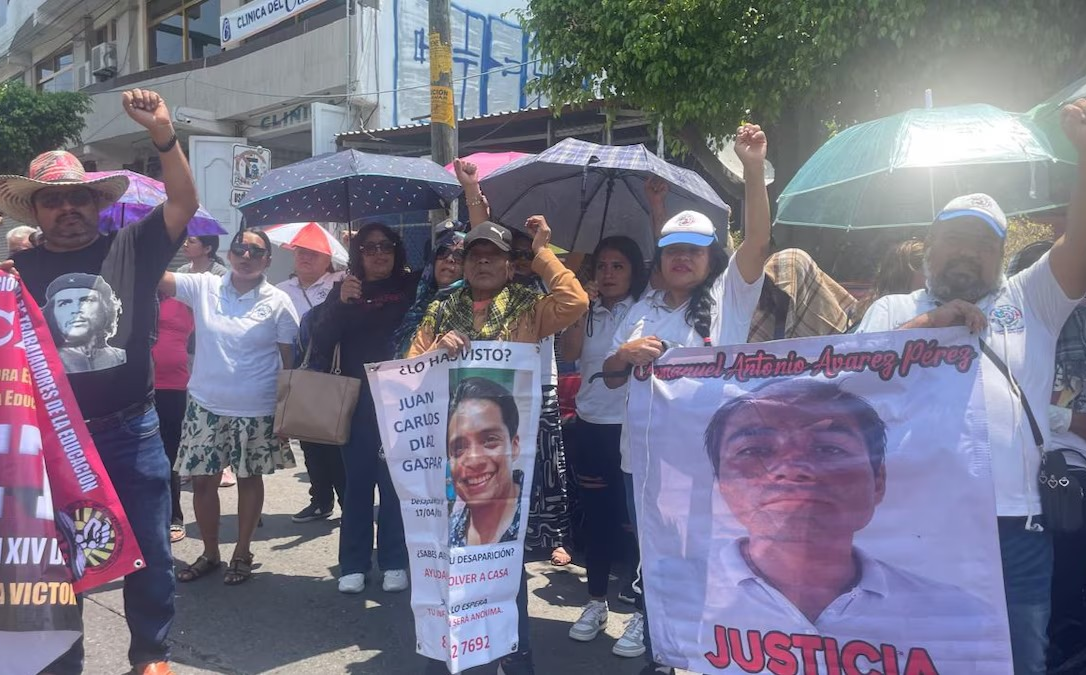

Members of the Lupita Rodríguez Collective denounced the increase in forced disappearances in Mexico, noting that from 1952 to 2019 there were 63,000 cases, and this year the number has already reached 125,000.
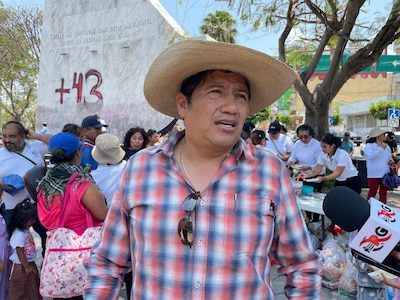
The Collective’s leader, David Molina Rodríguez, stated that in Guerrero alone there are 4,500 registered missing persons, adding that three people disappear every two hours in the country, a situation he described as grave and desperate for the families facing this violence. “But the worst part is the lack of results in the investigations and the apathy of the authorities at both the State and Federal Attorney General’s Offices,” he said.
Molina Rodríguez directly criticized the State Attorney General’s Office, accusing it of maintaining a distant stance toward search collectives and failing to uphold agreements such as holding regular meetings to monitor cases.
The group also denounced the lack of progress in the investigations, noting that key actions such as geolocation or data analysis are not being carried out in several cases, delaying the location of the victims.
Another problem raised was the backlog in forensic services, which, they stated, are overwhelmed, with overcrowded facilities and thousands of unidentified human remains, exacerbating the humanitarian crisis.
The group reiterated its demand to strengthen the institutions responsible for searching for missing persons, guarantee their autonomy, and advance the approval of local legislation that effectively addresses this problem, emphasizing that attention to children cannot be separated from the context of violence plaguing the country.
They reported that, as part of the Children’s Day celebrations, the group, with the support of other organizations, held an event where they distributed clothing, toys, school supplies, and food to children of missing persons.
David Molina demanded that the Forensic Medical Service (Semefo) not be transferred to the State Attorney General’s Office (FGE), arguing that the institution has shown an apathetic and distant attitude toward the families of missing persons.
The spokesperson for the “Lupita Rodríguez” collective recalled that the head of the FGE, Zipagná Torres Ojeda, pledged to double the staff of the Specialized Prosecutor’s Office for Disappeared Persons, a promise that has yet to be fulfilled.
“We have a prosecutor who doesn’t listen to the collectives; there is total apathy toward the social movement and the search for the families,” he accused.
He warned that transferring control of Semefo—currently under the Guerrero State Health Secretariat (SSG)—to the FGE would represent a setback, due to the lack of trust in that institution.
He emphasized that work continues on the creation of the Law to Eradicate Forced Disappearance in Guerrero, a process that has involved at least 24 meetings with the local Congress and state authorities.
He indicated that, at the request of advocacy groups, a Human Identification Center has been built, although it still needs to be equipped. The state government has proposed allocating 45 million pesos for this purpose, in addition to 25 million pesos for the State Commission for the Search for Missing Persons.
Molina Rodríguez emphasized the urgency of securing these resources, as the Ministerial Morgue is practically at capacity: it has a storage capacity for 1,167 bodies and currently houses more than 1,100.
“We no longer want bodies to be stored; we want them to be identified and returned to their families,” she stressed. In this regard, she acknowledged that this year, “Forensic Services has identified more than 100 people and returned them to their families with dignity. We must also recognize that they have done so with a limited budget and staff. Before, they only released about 27 bodies a year. It’s a huge leap, but we believe it can be improved.”
She added that the new legislation seeks to strengthen the autonomy of the State Search Commission, currently attached to the General Secretariat of the Government, which limits its operations. Furthermore, the collectives are pushing for the creation of a Forensic Science Institute to advance the identification of individuals and reduce the existing backlog.
Source: elfinanciero