In Guerrero, thousands of people experience poverty every day. According to the National Institute of Statistics and Geography (INEGI), 80,700 people in this state have ceased to be poor. However, activists, researchers, and farmers experience a different reality.
In the last 12 years, Guerrero has experienced hurricanes that destroyed communities and cities; violence has caused the closure of thousands of businesses. In the Sierra region, the only source of income for many villages has been the end: poppy cultivation. In the Mountain region, where the villages with the highest percentage of impoverished people are concentrated, more than 10,000 people flee this situation with their children each year to work as day laborers in the fields in the north of the country. They have preferred to be exploited rather than wait for hunger to invade their homes.
The INEGI report highlights that the main indicator used to determine the reduction in poverty is wages. Over the last six years, the minimum wage has risen from 88.36 pesos to 248.93 pesos. In the mountains, this variable doesn’t apply: there are no jobs, and lower wages.
In urban areas, the reality is very similar: the most recent National Survey of Occupation and Employment (INEGI), published on August 26, reported that in Guerrero, 76% of the employed population is in the informal sector, second only to Oaxaca and Chiapas.
The Reality in the Mountains
Abel Barrera Hernández, director of the Center for the Defense of Human Rights in the Mountains (Tlachinollan), points out that the INEGI study on poverty reflects the country’s macroeconomic situation and does not focus on individual communities.
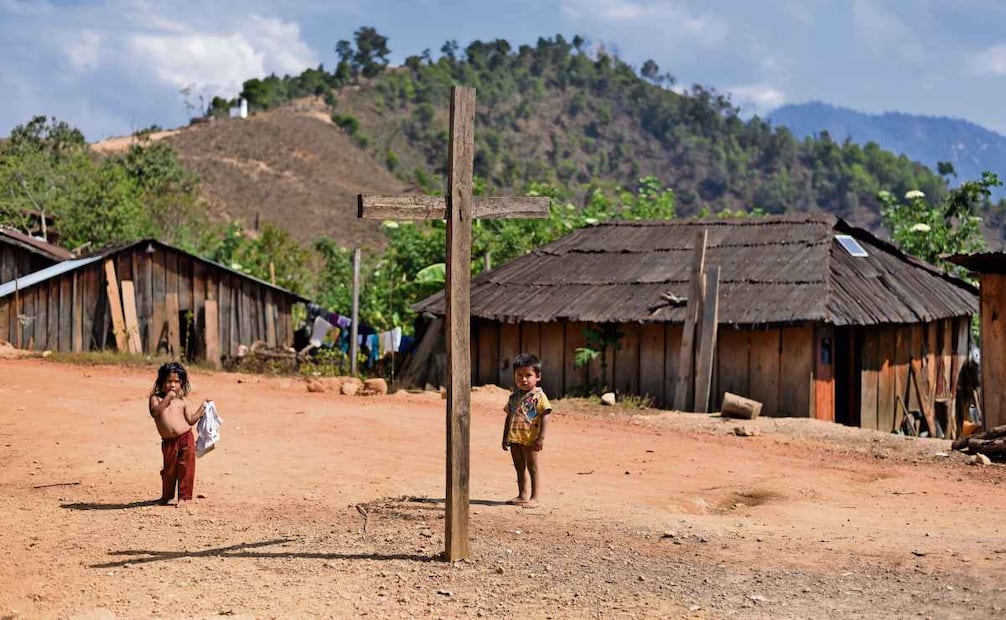
In the mountains, he says, the conditions of poverty remain unchanged for decades. Villages still lack roads, health centers, doctors, and nurses, much less medicine. Schools are in poor condition, and there is no drinking water or internet access. Entire villages are deeply disadvantaged. All of this makes life difficult.
The marginalization they live in is making everything more expensive. Getting food is more complicated; reaching the villages where the products are available involves a costly journey, which impacts the quantity and quality of the food they are able to purchase.
Furthermore, accessing health services is impossible; there is no possibility of receiving care in the public sector; instead, private pharmacies are doing a roaring trade: they offer free consultations in exchange for the purchase of medication.
Work? The defender is adamant: no one has one; everyone is hired as laborers for two or three days, but the one who hires them also can’t pay the minimum wage: “In the Mountains, they pay 150, 180, maximum 200 pesos per day.”
The inhabitants’ lives are based on day labor: leaving their villages for the fields in the north of the country to work grueling shifts without fair pay is the only way they can survive.
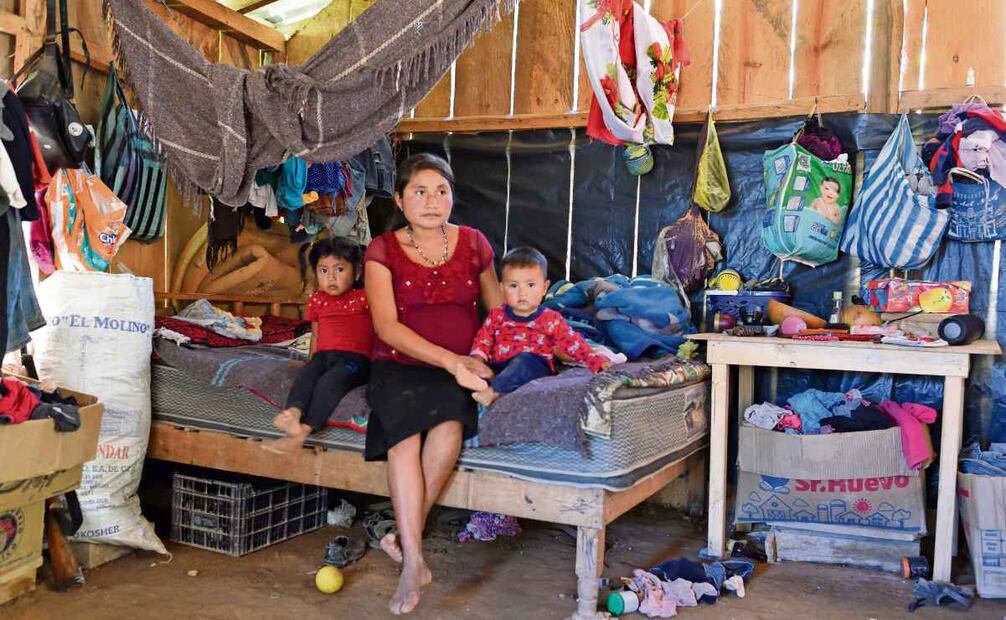
Day labor not only involves fleeing, but also abandoning their homes, their villages, their traditions, and, worse, it separates families. Not all day laborers can take their children with them; many leave them with grandparents, who prioritize food and neglect education, and the children who leave with their parents simply drop out of school.
Arturo García Jiménez is one of the founders of the Coalition of Ejidos of the Costa Grande of Guerrero (Cecgg), an organization of coffee farmers. He believes that the sample used by INEGI to record the “reduction in poverty” is insufficient to reflect the reality of the country.
He questions the fact that it was applied to 108,718 homes out of the 38,830,230 households in Mexico and that it doesn’t ask whether the home is owned, because that would be a good indicator for measuring poverty.
García Jiménez highlights three aspects that affect the daily lives of Guerrero residents and are absent from the survey: climate change, violence and insecurity, and the lack of public policies.
The impact of climate change
In Guerrero, storms and hurricanes have been relentless. Ingrid, Manuel, Otis, and John damaged thousands of homes, but also public infrastructure that in many cases has not been repaired.
The impact that remains most vivid for Guerrero residents is that of Otis, a Category 5 hurricane that completely devastated Acapulco, the main city in terms of its economy and population. Before Otis, Acapulco had the highest number of people living in extreme poverty in the entire country. In 2020, the National Council for the Evaluation of Social Development Policy (CONEVAL) reported that 126,672 people in the port did not have enough income to even cover their food.
In 2025, Coneval was supposed to submit a similar report, but it didn’t. However, in December 2023, José Nabor Cruz, then executive secretary of the defunct agency, stated that, as a result of Otis, poverty could increase by 20 percentage points in Guerrero. It is unknown whether this was recorded. Another aspect that goes unmeasured, he says, is the contamination of rivers and aquifers, illegal logging, mineral exploitation, and the lack of environmental standards in sanitary landfills—all of which, he asserts, impact people’s impoverishment.
Read also: It’s difficult to reduce poverty if there is no economic growth or employment, experts say; gaps in health and education persist
The blow of violence
The second absence from the INEGI results, García Jiménez points out, is violence and insecurity. He asserts that criminal groups have taken control of territories where they impose prices and distribution of basic goods, in addition to extortion that directly affects citizens’ pockets: “There’s a type of criminal tariff; the INEGI (National Institute of Statistics and Geography) doesn’t record that crime charges two pesos more per kilo of tortilla.”
The final aspect, he believes, is the lack of public policies. He asserts that around 43% of Guerrero residents live in rural areas, and despite this, the state government allocates less than 1% of the public budget. “It gives us 7,300 pesos per person, regardless of whether you have half a hectare or one hectare. Divide that by 365 days, and it gives us 34 pesos per day. Is this going to help boost production and help us escape poverty?” he questions.
A State Trapped in Poverty
Gabino Solano Ramírez, academic and researcher at the Autonomous University of Guerrero, explains the state’s impoverishment as a result of the lack of a long-term plan and the political class’s inability to implement it. “We don’t have in sight at least a long-term project for the state, a project with a grand vision, a government plan that would allow Guerrero to gradually overcome this situation over a period of time, because it won’t happen overnight, and we’ll surely be talking about the same thing in the next survey.”
Source: eluniversal