In order to update the genetic data held by the Guerrero State Attorney General’s Office (FGE), the third round of sample collection took place this weekend, and 23 search forms for missing persons were activated in this city, reported groups of relatives of missing persons.
They reported that 125 DNA samples were collected and five missing persons reports were filed. A fund to assist victims was also registered.
Saúl Badillo, attorney for the Morelos Center, explained that these types of events “are spaces of hope for families.
“We know that there are many bodies under custody (of the FGE) that already have genetic data; However, there are no samples to conduct the comparisons, and these sessions are for updating them.”
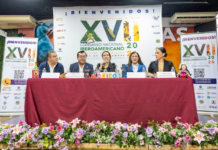
The Missing Persons, María Herrera, and the José María Morelos y Pavón Regional Human Rights Center (Centro Morelos) stated that the session, held from October 13 to 17 and from October 20 to 24 at the offices of the Cathedral of the Assumption of Mary in Chilpancingo, was coordinated by the FGE (Federal General Secretariat of the Federal Government).
The State Commission for the Search for Persons, the State Executive Commission for Victim Assistance, and the Guerrero State Human Rights Commission also participated. The Minerva Bello Center for the Rights of Victims of Violence, the association Voice with Dignity and Justice Mexico, and El Colombiano Sí Ayuda (The Colombian Yes Help) also participated.
The coordinator of the María Herrera Family Search, Gema Antúnez Flores, explained that 125 genetic samples were taken and 95 questionnaires were administered to construct a biological and social profile of the missing victims. with the aim of facilitating their identification.
“Twenty-three missing persons search forms were created, and 14 people received psychological support,” he added.
He stated that this work “is very encouraging for the families of missing persons, who may already be in the Forensic Medical Service. We hope for results and that they can soon find peace.”
He also emphasized that during the sample collection, “many people who do not belong to groups came forward, and in part, this was because the activity was held in a religious center, which gave them confidence.”
He also thanked the staff of the General Coordination of Forensic Services of the FGE for their support. “This has been the largest collection that has been carried out since the sessions held in Iguala and Acapulco,” he concluded.

Source: jornada